


symptom
When grapes enter the coloring and ripening stages, fruit cracking is easy to occur. After fruit cracking, it is easy to be infected with germs, causing ear rot, and attracting scarabs, aphids and other pests to suck juice, spread germs, and affect the yield and quality of grapes. Grape cracking has a great impact on yield and quality. Variety factors, soil dryness and humidity, direct sunlight, large temperature changes, excessive fruit retention, diseases, and improper use of expandin can all lead to grape cracking.
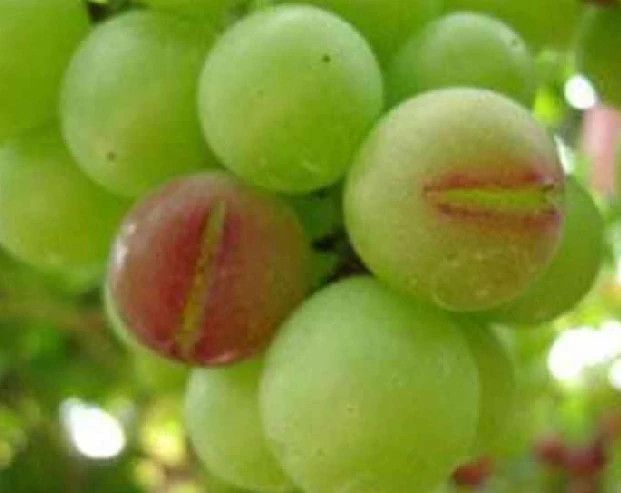
The typical symptoms of fruit cracking mainly include the following 4 kinds.
(1) Radial cracks. With the fruit pedicle as the center, it extends to the fruit shoulder and splits radially. The green ripening period begins, and the later stage of veraison increases.
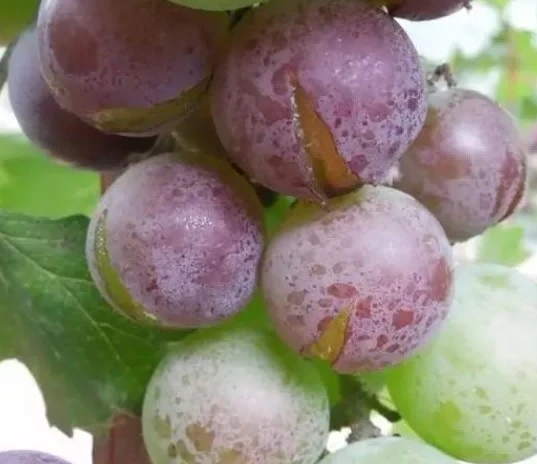
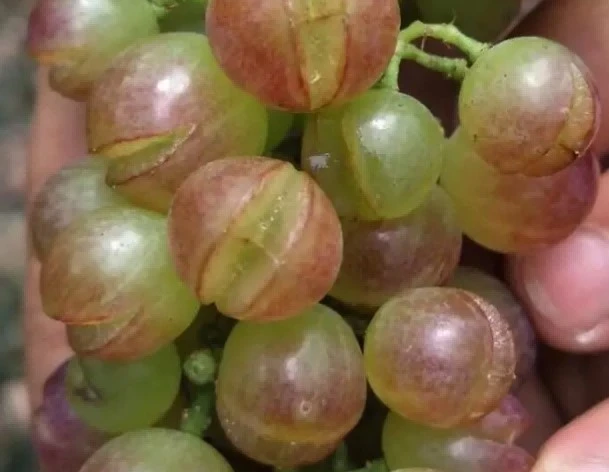
(2) Concentric cracks. With the fruit pedicle as the center, there are concentric and intermittent micro-cracks on the fruit surface. In severe cases, the cracks are ring-shaped, and most of them appear before maturity.
(3) Striped cracks. There are longitudinal and transverse irregular cracks at the top and bottom of the fruit.
(4) Longitudinal fracture. Occurs mainly before fruit ripening.
Etiology
(1) The greenhouse is small in size and the temperature changes quickly. Especially under the current high temperature conditions, the greenhouse is subject to strong sunlight, high temperature, and high transpiration intensity on the leaf surface. When the transpiration intensity reaches the saturation point, the stomata of the leaves are closed, and the transpired water continues to be forced into the fruit. When the bearing capacity of the fruit skin reaches the limit, There is a crack.
(2) The ecological environment of the root system is not good. Soil compaction, poor air permeability, weakening of root function (absorption, synthesis, secretion, regulation), hypoxic respiration and other vicious circles cause the symptoms of deficiency in the aboveground part, especially calcium nutrition and absorption are affected, resulting in peel toughness At the same time, uneven dryness and wetness can also easily cause fruit cracking.
(3) Seed missing. The endogenous apoptotic hormones and active enzymes produced by the seeds are out of balance and lose their self-regulating buffer function. At present, in order to promote the growth of fruit grains, grape growers use swellin to expand grapes. Swellin has an impact on the formation of seeds, leading to seed loss and abnormal hormone regulation, which is also an important cause of fruit cracking.
(4) In some grape varieties, the fruit grains are too tightly attached, and as the fruit grains increase, the mutual extrusion between the fruit grains can lead to fruit cracking.
(5) Grapes infected with powdery mildew can also easily cause fruit cracking.
Prevention methods
(1) Reasonable watering to avoid sudden dry and wet soil. From the time of sizing to the ripening stage, the fruit has low water requirements. Excessive watering will hinder the accumulation of sugar, poor coloring, lower quality, and prone to fruit cracking. Therefore, soil irrigation should be properly controlled to prevent flooding. After entering the rainy season, there is a lot of rainfall, and the shed film must be repaired in time to prevent rainwater from entering the shed. Once rainwater enters the shed, it must be drained in time. For open-air vineyards, the ground can also be covered with grass and plastic film. Covering with plastic film can prevent the root system from absorbing too much water after rainfall, and reduce soil water evaporation and maintain soil moisture balance.
(2) Avoid direct sunlight and sudden changes in climate. If the young grapes suddenly encounter strong winds and high temperatures during the young fruit period, it will also cause fruit cracking. Before the high temperature comes, you can irrigate or spray water on the plants at the right time, and reduce the temperature by replenishing water or using sunshade nets to reduce the impact of sudden climate changes. Before the high temperature, cover the ears with newspapers to avoid direct sunlight, which can also effectively reduce the occurrence of fruit cracking.
(3) Pay attention to the supplement of calcium fertilizer. Calcium fertilizer plays an important role in the quality and storability of grapes. Calcium deficiency in grapes can easily cause fruit cracking, and the demand for calcium in grape fruit expansion is very large. During this period, grapes are prone to calcium deficiency. Especially for bagged grapes, the fruit transpiration is weakened, and the problem of calcium deficiency is more prominent. It can be sprayed 2 to 3 times with calcium-containing foliar fertilizer to enhance the toughness of the peel and reduce fruit cracking.
(4) For powdery mildew, you can choose to spray Trichoderma harzianum 500 times before and at the beginning of the disease, and the control effect is better. In orchards where the disease is severe, the diseased ears and fruits should be removed in time, and then sprayed with etherphenol, metrafenone, pyraclostrobin, flufenapyrox and other chemicals to prevent the bacteria from infecting other healthy fruits.
(5) Appropriate thinning of grains. For varieties with relatively compact fruit grains, it is necessary to properly thin the flowers and fruits and adjust the fruit density, such as topping after flowering or finely thinning the fruit before the rapid expansion of young fruits, so that the fruit grains can maintain a suitable density and prevent the fruit grain density from being too large Squeeze and crack the fruit. Fruit growers can also spray fruit ears with 10-25mg/L gibberellin 5-10 days before flowering to elongate the cobs so that the fruit grains are loose and not crowded.
(6) It is advisable to dip the fruit with dilatant sooner rather than later. Generally speaking, it is most suitable to dip the grapes when they grow to the size of soybeans.
(7) It is recommended to spray 3.4% Chi·Inb·Yun wettable powder (Bihu) 7500 times liquid.


